Why Landscape Art Is Better Than Wall Posters?
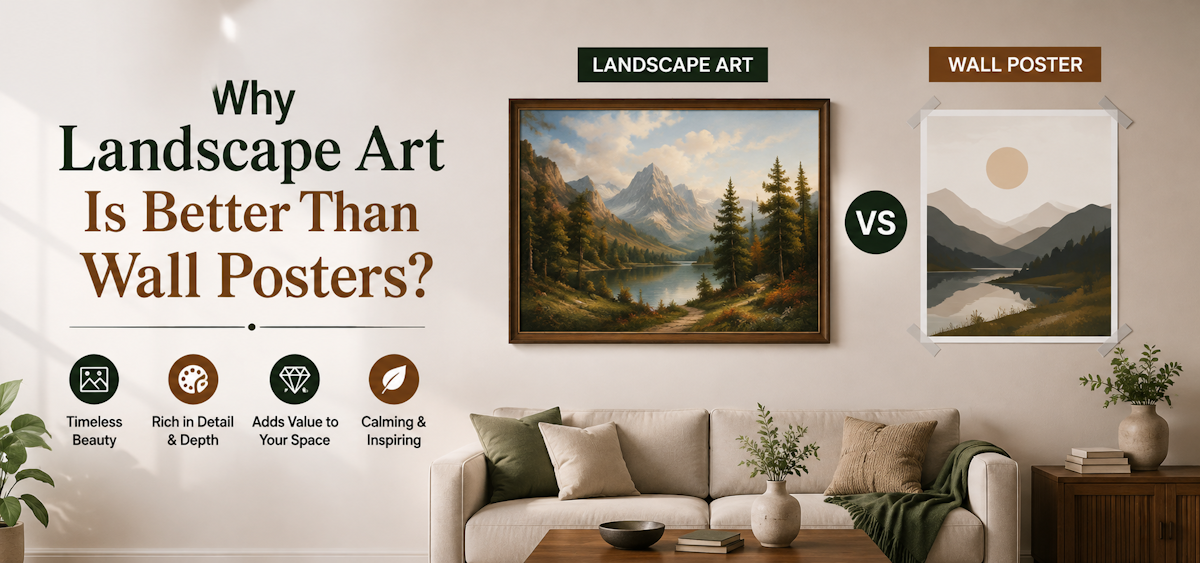
Landscape art can transform a room with depth, atmosphere, and visual character that ordinary wall posters rarely achieve. Paintings create a stronger decorative presence because artists use composition, colour, perspective, texture, and tonal variation to build a sense of space. Posters can fill empty walls, but they often function as flat graphic decoration. Landscape paintings, by contrast, can connect furniture, lighting, wall colour, and interior materials into a more cohesive setting.
What Separates Landscape Art From Wall Posters?
Landscape paintings and wall posters both decorate vertical surfaces, yet they deliver very different visual experiences. The distinction comes from artistic depth, surface treatment, perceived permanence, and the way each piece interacts with the surrounding interior.
Landscape Art Creates Greater Visual Depth
Landscape paintings often use foreground, middle ground, and background relationships to create a convincing sense of distance. Artists may use atmospheric perspective, tonal shifts, light, shadow, and colour transitions to make mountains, forests, rivers, beaches, fields, or city views appear spatially layered.
Consequently, a landscape painting can make a wall feel less flat. Viewers often perceive visual movement from the nearest elements toward distant features, which creates a stronger sense of dimension.
Wall posters usually rely on a printed image presented on a relatively flat surface. Although a well-designed poster can look attractive, it typically lacks the physical and tonal complexity associated with painted or textured canvas artwork.
Paintings Offer a More Finished Decorative Presence
A landscape painting usually functions as a central decorative element rather than a temporary wall accent. Its scale, composition, surface, and edge treatment can give it greater visual weight within a room.
Moreover, landscape artwork can coordinate naturally with wood, stone, fabric, metal, and other interior materials. A mountain scene may reinforce an earthy palette, while a coastal composition can soften a light, airy room.
Posters often work best in casual settings, children's rooms, student spaces, hobby areas, or interiors that require frequent decorative changes. However, paintings generally provide a more settled and intentional appearance in formal or carefully styled rooms.
Why Landscape Paintings Create a Stronger Emotional Atmosphere
Landscape imagery connects interior spaces with visual references to nature, open space, weather, light, and distance. As a result, it can influence the mood of a room without requiring literal decorative themes.
Different compositions produce different effects, so buyers should consider subject matter alongside colour and scale.
Natural Scenes Can Make Interiors Feel More Relaxed
Forest paths, quiet lakes, soft hills, misty mountains, and coastal horizons often create a calmer visual rhythm than bold graphics or text-heavy posters. Their compositions usually contain natural curves, layered depth, and gradual colour transitions.
Furthermore, landscape paintings can introduce a sense of openness into enclosed rooms. A wide horizon or distant mountain range can visually extend the wall, especially when the artwork has a horizontal orientation.
This effect can work particularly well in bedrooms, living rooms, hotel rooms, lounges, reception areas, and dining spaces where occupants benefit from a visually comfortable environment.
Landscape Subjects Support Different Interior Moods
Not every landscape painting creates the same feeling. A bright coastal scene can feel airy and refreshing, while a dramatic mountain composition may create a stronger, more grounded presence.
Similarly, autumn forests can bring warmth through rust, ochre, brown, and muted red tones. Snow scenes can introduce cooler visual balance through white, grey, blue, and charcoal.
Because landscape art covers such a broad range of subjects, buyers can choose imagery that supports the intended atmosphere rather than forcing the room to adapt to the artwork.
Landscape Art Offers Better Long-Term Decorative Value
Interior decoration changes over time, but well-selected landscape paintings can remain relevant through furniture updates, colour changes, and seasonal styling. Their visual flexibility gives them an advantage over many trend-driven posters.
The key lies in choosing artwork that relates to enduring interior elements rather than temporary accessories.
Landscape Paintings Adapt to Changing Decor
A painting with balanced colours can continue working even when cushions, curtains, rugs, or small accessories change. For example, a landscape containing beige, green, blue, brown, and cream can coordinate with several different interior palettes.
Therefore, buyers do not need to replace the artwork every time they refresh secondary decor.
Posters often depend more heavily on graphic trends, typography, slogans, pop imagery, or specific design fashions. When those styles lose relevance, the poster may start to feel dated even if the print remains in good physical condition.
Paintings Can Become Anchor Pieces
An anchor piece gives an interior a visual reference point. Landscape art can perform this role because its colours and proportions can influence the selection of nearby fabrics, furniture, lighting, and accessories.
For instance, a large nature painting above a sofa can establish the main colour direction for the seating area. Designers can then repeat selected tones from the artwork through cushions, lamps, ceramics, or rugs.
Consequently, the artwork becomes part of the design structure rather than an afterthought placed on an empty wall.
Landscape Art Gives More Flexibility in Size and Placement
Artwork scale strongly affects wall balance. Landscape paintings are available in many dimensions and orientations, making them suitable for narrow walls, broad furniture arrangements, large feature walls, and grouped displays.
Buyers should select size according to the actual installation area rather than the apparent proportions shown in styled images.
Large Landscape Paintings Suit Feature Walls
Wide landscape compositions work naturally above sofas, beds, sideboards, consoles, restaurant banquettes, and reception desks. Their horizontal format can visually connect with long furniture pieces.
Additionally, large canvases can fill substantial walls without requiring multiple unrelated decorative elements. A single statement painting often creates a cleaner visual hierarchy than several small posters.
Large artwork also becomes easier to appreciate from a distance because broad shapes, strong tonal divisions, and clear horizons remain visible across the room.
Smaller Paintings Work Well in Groupings
Not every wall needs a single large piece. Smaller landscape paintings can create attractive arrangements in corridors, stairways, reading corners, dining areas, or narrow wall sections.
However, grouped artwork needs consistency. Similar frame treatment, related colour palettes, repeated dimensions, or connected subject matter can make several pieces feel intentional.
In contrast, random poster sizes and unrelated graphic styles can create visual clutter unless the room deliberately follows an eclectic display concept.
Landscape Paintings Work Across More Interior Styles
Landscape art does not belong to one decorative category. The same subject can appear traditional, contemporary, minimalist, impressionistic, abstracted, rustic, or highly realistic depending on technique and colour treatment.
This stylistic range makes landscape paintings useful in many different interiors.
Modern and Contemporary Spaces
Modern interiors often benefit from simplified landscape compositions with clean colour fields, restrained palettes, or semi-abstract forms. These paintings provide natural references without making the room feel overly traditional.
Moreover, monochrome or muted landscapes can work well with concrete, metal, glass, and minimalist furniture.
Traditional and Transitional Interiors
Traditional rooms can support detailed countryside scenes, forests, rivers, architectural vistas, or mountain compositions. Richer colours and more representational styles often pair well with wood furniture, patterned textiles, and classic finishes.
Transitional interiors can combine both approaches. A relatively realistic landscape presented with simplified colour and contemporary proportions can bridge traditional furniture and modern decorative elements.
Consequently, landscape art can remain useful even when an interior combines several design influences.
Why Posters Still Have a Place in Interior Decor
Landscape paintings offer several advantages, but wall posters remain useful in specific situations. A balanced comparison should consider purpose, budget, desired permanence, and decorative style.
Posters work particularly well when flexibility matters more than long-term visual presence.
Posters Suit Frequently Changing Spaces
Rental properties, student rooms, children's rooms, seasonal displays, hobby areas, and temporary commercial installations may benefit from posters because they are easy to replace.
Additionally, posters support typography, graphic design, illustrations, movie themes, motivational messages, and other content that paintings may not aim to reproduce.
Their lighter format can also simplify installation where walls cannot support heavier decorative pieces.
Paintings Suit More Permanent Interior Schemes
Landscape paintings make more sense when the goal is to create a cohesive room that will remain visually stable for longer periods.
They generally offer more depth, texture, material presence, and integration with furniture and architectural finishes. Therefore, buyers who want wall decor to become part of the interior rather than a temporary accent may prefer paintings.
The best choice depends on the room, not on an absolute rule that one format must replace the other everywhere.
How to Choose Landscape Paintings Online
Online purchasing requires careful attention to dimensions, colour, materials, orientation, and construction. Product images can show subject matter effectively, but they do not always communicate physical scale accurately.
Before making a selection, buyers should evaluate how the artwork will function on the actual wall.
Measure the Wall Before Choosing
Start with the usable wall width and height. Then account for furniture, windows, switches, lighting fixtures, mouldings, and other permanent elements.
Next, consider the normal viewing distance. A large painting with clear shapes often works better across a broad room, while smaller detailed artwork can suit closer viewing areas.
Buyers who plan to buy landscape paintings online in India should compare the listed artwork dimensions with actual wall measurements rather than relying solely on staged room photographs.
Check Construction and Finish
Review information about canvas material, print or paint finish, stretcher support, edge treatment, mounting provisions, and care instructions.
Furthermore, verify whether the listed dimensions refer to the complete artwork or individual panels when considering multi-panel compositions.
Screen settings can change colour appearance, so buyers should allow for slight visual differences between the digital image and the physical piece. Careful evaluation reduces the risk of selecting artwork that fits stylistically but fails in scale or finish.
Common Mistakes When Choosing Landscape Wall Art
Good artwork can still look wrong when buyers ignore scale, orientation, colour balance, or placement. Avoiding a few common errors can significantly improve the final result.
Consider these practical points:
Do not select artwork before measuring the wall.
Avoid very small pieces on large feature walls.
Do not match every artwork colour exactly with furniture.
Avoid filling every empty wall without creating visual hierarchy.
Consider lighting before choosing dark or highly detailed compositions.
Check viewing distance before selecting intricate scenes.
Coordinate grouped artwork through colour, size, or subject.
Avoid placing delicate artwork in areas exposed to repeated moisture or physical contact.
Confirm mounting requirements before installation.
Choose a subject that suits the room's mood rather than a temporary fashion.
Consequently, thoughtful selection improves both visual balance and long-term decorative value.
Conclusion
Landscape art offers greater depth, texture, visual permanence, and interior coordination than ordinary wall posters in many residential and commercial settings. Paintings can create atmosphere, support colour schemes, establish focal points, and remain relevant as surrounding decor changes. Posters still suit flexible or temporary displays, but landscape paintings provide stronger value when wall decor needs to feel integrated and enduring. Careful attention to scale, orientation, colour, lighting, construction, and placement helps buyers choose artwork that strengthens the entire interior rather than simply filling an empty wall.
FAQs
What size landscape painting should I choose for a living room?
Choose a size that relates to both the wall and the furniture beneath it. A broad sofa generally needs a wider artwork than a narrow console. Measure the usable wall area first, then consider viewing distance. Large rooms usually support larger compositions, while compact rooms benefit from controlled scale and sufficient surrounding wall space.
Are landscape paintings suitable for modern interiors?
Yes. Modern interiors can work especially well with simplified, semi-abstract, monochrome, or muted landscape paintings. Look for compositions that complement clean furniture lines and restrained materials. A landscape does not need traditional detailing; contemporary colour treatment, minimal forms, and large-scale presentation can make natural imagery feel current and architecturally appropriate.
Which landscape colours work best with neutral decor?
Neutral rooms can support many landscape palettes. Soft greens, blues, beige, rust, charcoal, cream, brown, and muted gold often coordinate naturally with neutral furniture and finishes. Instead of matching colours exactly, repeat one or two existing tones and introduce moderate contrast so the artwork remains visible without making the room feel disconnected.
Is canvas landscape art better than framed posters?
Canvas landscape art usually provides more texture, depth, and material presence, while framed posters provide affordability and easy replacement. The better choice depends on purpose. Canvas suits interiors that need a more permanent decorative focal point, whereas posters suit flexible spaces where graphic variety and frequent updates matter more than surface richness.
Where should a landscape painting be placed?
Place landscape paintings where their orientation and scale support the surrounding architecture or furniture. Common positions include above sofas, beds, consoles, sideboards, dining furniture, and reception seating. Avoid walls where doors, curtains, direct glare, or frequent contact interfere with viewing. The artwork should feel visually connected to nearby elements.
Are landscape paintings suitable for restaurants?
Yes. Landscape paintings can create visual atmosphere without distracting from the dining experience. Choose imagery and colours that complement lighting, furniture, materials, and the restaurant concept. Warm countryside scenes may suit earthy interiors, while coastal, mountain, abstracted nature, or architectural views can work effectively in contemporary dining spaces.
How can I judge landscape painting quality online?
Review more than the main product image. Check canvas material, image resolution, surface finish, stretcher construction, edge treatment, mounting details, and care information. If the artwork appears textured, verify whether the texture is physically applied or digitally represented. Clear dimensions and construction details provide better buying information than styled photographs alone.
Should a landscape painting match the wall colour?
No. The painting should coordinate with the entire room rather than match the wall exactly. Consider furniture, flooring, curtains, fabrics, and major finishes. A painting may repeat selected interior colours while introducing contrast. Enough tonal separation between the wall and artwork usually helps the piece maintain a clear visual presence.
How should landscape canvas paintings be maintained?
Remove dust gently and keep the canvas away from excessive moisture, grease, harsh cleaning products, and repeated physical contact. Follow any care instructions associated with the artwork's finish. In commercial spaces, choose placement carefully so cleaning activities, food service, doors, luggage, or furniture movement do not repeatedly contact the canvas.
Can landscape art work on a large blank wall?
Yes. Large blank walls often benefit from one substantial landscape painting or a coordinated multi-panel composition. Measure the full usable wall and consider viewing distance before choosing. A small isolated piece may look visually weak on an expansive surface, while appropriately scaled artwork can create a clear focal point and improve wall balance.